
Early Career Programme 2026
Workshop 1: How to Fail at Lectures, Grants and Papers (or Not) | Workshop 2: Neuroscience for Psychiatrists: Foundations and Clinical Applications | Workshop 3: WFSBP Young Investigators Workshop | Workshop 4: Personality Disorders on the backdrop of ICD11 and DSM 5TR
Workshop 1 | How to Fail at Lectures, Grants and Papers (or Not)
Friday, 28 August 2026; 10:00 - 12:00
Duration: 2 Hours | Format: Lectures & Discussion
About this Workshop
The aim of this workshop is in a tongue in cheek manner two present pitfalls end traps in the three critical academic elements; lectures grant applications and papers. Three eminent academics will present on each of these topics. The first lecture will cover the topic of how to give a terrible lecture, the second will focus on tips and tricks to ensure your grant application fails, and the final lecture will focus on techniques to ensure that your academic manuscript is rejected. The expectation that this will both be humorous and informative.
Topics
How to give a terrible lecture
Common presentation pitfalls and how to avoid them
How to ensure your grant application fails
Tips and tricks to ensure your grant never gets funded
How to guarantee your paper is rejected
Techniques to ensure your manuscript is rejected
Learning objectives
Increase skills in lecturing, grant writing, and paper generation
Speakers
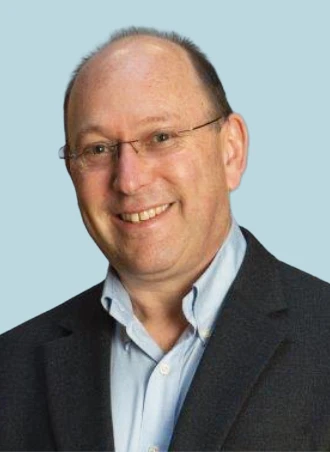
Prof. Michael Berk
Institute for Mental and Physical Health and Clinical Translation, Deakin University, Australia
MB Professor Michael Berk is currently a NHMRC Leadership 3 research Fellow and is Deakin Distinguished Chair of Psychiatry at Deakin University and Barwon Health, where he heads the Institute for Innovation in Mental and Physical Health and Clinical Translation (IMPACT).
He also is an Honorary Professorial Research fellow in the Department of Psychiatry, the Florey Institute for Neuroscience and Mental Health and Orygen Youth Health at Melbourne University, as well as in the School of Public Health and Preventive Medicine at Monash University.
He has published over 1650 papers and is listed by Thompson Reuters ISI as highly cited (2015-2025).
His major interests are in the discovery and implementation of novel therapies.
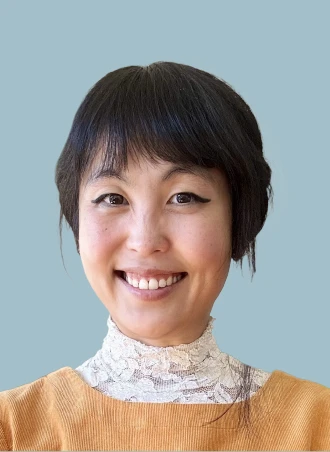
Prof. Jee Hyun Kim
Institute for Mental and Physical Health and Clinical Translation, Deakin University, Australia
Professor Jee Hyun KIM is an Australian Research Council Future Fellow and the Head of Molecular Psychiatry Laboratory at the Institute of Mental and Physical Health and Clinical Translation, Deakin University.
Jee studies the neurobiology of memory in mental disorders across development and ageing in rodents and humans, leading the mapping of dopamine receptors (DOPAMAP) across development in male and female mice in partnership with the Human Brain Project funded by European Union.
Jee has a strong translational focus, co-leading the Trimetazidine In bipolar DEpression (TIDE) clinical trial.
Jee has won numerous national and international awards for her ground-breaking work (https://en.wikipedia.org/wiki/Jee_Hyun_Kim), including the World Federation of Societies of Biological Psychiatry (WFSBP) Young Investigator Award.
Jee has >120 publications, for which she is the corresponding author to >60. Citations are >5,000. Jee is an active science communicator, with her TEDxMelbourne talk reaching >800,000 views.
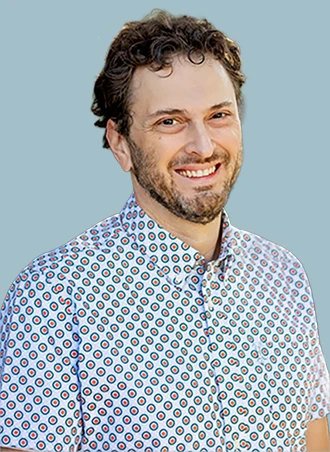
Prof. Dan Siskind
University of Queensland, Faculty of Health, Medicine and Behavioural Science, Brisbane, Australia
Prof Siskind trained as a psychiatrist in Australia and the United States.
He works clinically as a psychiatrist in Brisbane, Australia with people with treatment refractory schizophrenia.
His research interests include treatment refractory schizophrenia, clozapine and the physical health comorbidities associated with schizophrenia.
He has over 300 publications and AU$60million in competitive research grants, with over AU$7 million as CIA.
Workshop 2 | Neuroscience for Psychiatrists: Foundations and Clinical Applications
Saturday, 29 August 2026; 10:00 - 12:00
Duration: 2 Hours | Format: Lectures & Discussion
About this Workshop
Advances in neuroscience over the past two decades have transformed our understanding of brain function and the neurobiology of psychiatric disorders. However, many early-career psychiatrists receive limited training in translating contemporary neuroscience concepts into clinical practice. This is a 2-hour workshop designed to provide a concise, clinically relevant overview of the neuroscience foundations of psychiatry. The session will introduce key principles of brain organization, neural circuits, neurotransmission, and neuroplasticity, and discuss how alterations in these systems contribute to major psychiatric disorders including schizophrenia, mood disorders, anxiety disorders, and substance use disorders. Emphasis will be placed on linking modern neuroscience concepts such as circuit-based models of psychopathology and multi-neurotransmitter interactions, to clinical phenomena and treatment mechanisms. Through focused lectures and illustrative clinical examples, the workshop aims to enhance neuroscience literacy among psychiatrists and mental health trainees and also to promote integration of contemporary neurobiological insights into diagnostic formulation and therapeutic decision-making.
Learning Objectives
By the end of this workshop, participants will be able to:
Describe key principles of brain organization, neural circuits, neurotransmission, and neuroplasticity relevant to psychiatric practice.
Explain how disturbances in neural circuitry and neurochemical systems contribute to major psychiatric disorders such as schizophrenia, mood disorders, and anxiety disorders.
Apply contemporary neuroscience concepts to clinical formulation and to understanding mechanisms of action of psychiatric treatments.
Speakers
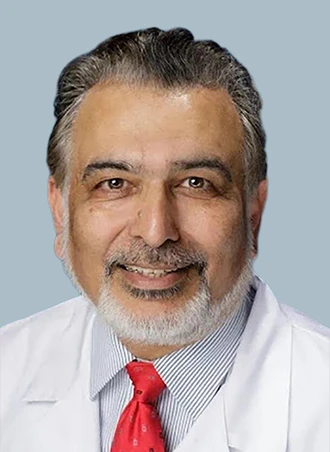
Prof. Rajiv Tandon
Western Michigan University Homer Stryker College
of Medicine, USA
Rajiv Tandon, MD, is Professor and Chair Emeritus at Western Michigan University Homer Stryker College of Medicine.
An internationally recognized psychiatrist, educator, and researcher, he completed his psychiatric residency at the University of Michigan and went on to hold senior leadership positions including Chief of Psychiatry for the State of Florida and Professor/Vice-Chair at the University of Florida.
He has authored over 400 scientific publications and delivered more than 1,500 national and international presentations.
Dr. Tandon is Editor-in-Chief of the Asian Journal of Psychiatry, under which its impact has progressively increased, and serves on the editorial boards of several international journals.
He is a three-time recipient of the Schizophrenia Research highest-impact author award and has received over 20 national and international awards for research and teaching, including the Exemplary Psychiatrist Award from NAMI on three occasions.
He was a member of the DSM-5 and DSM-5-TR workgroups on schizophrenia and related psychotic disorders and currently serves on the DSM-5-TR Review Committee for serious mental disorders.
He co-leads an international project on reconceptualizing schizophrenia involving 50 leading experts worldwide, and actively promotes psychiatric research and scientific publication across Asia.
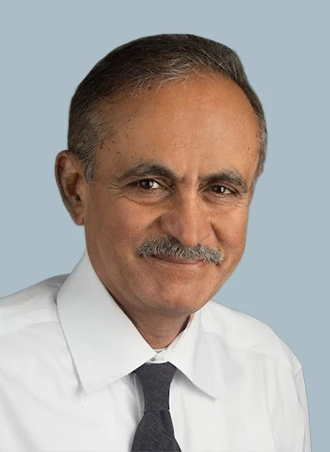
Prof. Matcheri Keshavan
Stanley Cobb Professor of Psychiatry, Harvard Medical School and Beth Israel Deaconess Medical Center, USA
Matcheri Keshavan, MD, is Stanley R. Cobb Professor of Psychiatry at Beth Israel Deaconess Medical Center, Harvard Medical School.
He received his medical training in Mysore, India, and his psychiatric training in Bangalore, Vienna, London, and Detroit.
His research focuses on the neurobiology of psychosis, particularly first-episode psychotic disorders, as well as neuroimaging, cognitive remediation, and early intervention.
Dr. Keshavan has published around 1,030 works, including over 850 peer-reviewed papers and 4 books. With over 81,000 citations and a Google Scholar H-index of 143, he ranks among the top 1% of researchers in his field.
He has received numerous awards, including the Kempf Award from the American Psychiatric Association, the Stanley Dean Award, the NAMI National Research Award, and the WFSBP Research Award.
He is a Distinguished Fellow of the American Psychiatric Association and a Fellow of the Royal Colleges of Psychiatrists (UK) and Physicians (Canada).
He is the Founding Editor-in-Chief of the Asian Journal of Psychiatry and a former editor of Schizophrenia Research.
For list of publications, see: https://connects.catalyst.harvard.edu/Profiles/display/Person/17411
Workshop 3 | WFSBP Young Investigators Workshop
Sunday, 30 August 2026; 10:00 - 12:00
Duration: 2 Hours | Format: Presentations & Mentorship
About this Workshop
A dynamic workshop where 8 early-career researchers deliver short presentations followed by two mentoring round tables with senior experts offering structured feedback on research projects, publishing strategies, and translational study design.
Mentoring Round Tables
Research Methods
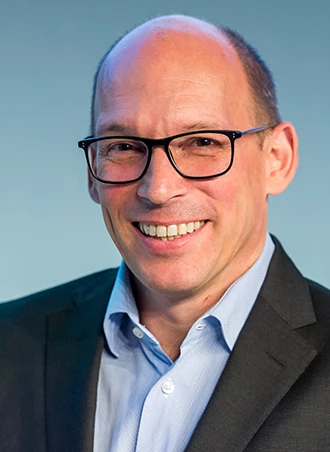
Dr. Andreas Reif
University Medical Centre
Frankfurt, Germany
Department of Psychiatry, Psychosomatic Medicine and Psychotherapy, University Medical Centre Frankfurt, Frankfurt, Germany.
Andreas Reif is a German Psychiatrist, who received his training at the University Hospital Würzburg, where he also did his residency and later on became Vice Chair.
In 2014, he took over the position of Chair of the Department of Psychiatry, Psychosomatic Medicine and Psychotherapy at the University Medical Center Frankfurt, where he is also full professor.
ARs clinical and research interests include affective disorders (TRD, bipolar disorder, suicidality) and adult ADHD; his research is translational in nature and revolves around the ideas of precision psychiatry, i.e. identifying the best therapy at the exact time for a given individual patient.
He has published more than 650 original papers and reviews, also in the most prestigious journals such a the New England Journal of Medicine, Lancet and Science, and has an h² index of 97.
He is an internationally renowned speaker and active in several learned societies, especially the German Psychiatric Association (DGPPN), where he is an executive board member, as well as ECNP, where he is president elect.
Also, he is involved in several clinical guidelines and outreach programs.
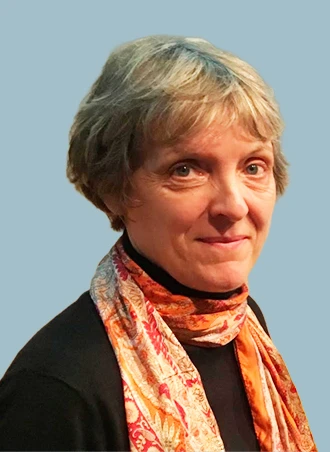
Dr. Florence Thibaut
University Hospital Cochin Paris and Université Paris Cité, France
Florence THIBAUT, M.D., Ph.D., is Professor of Psychiatry at the University Hospital Cochin Paris and the University of Paris Cité, France. Psychiatrist and Endocrinologist, PhD in Neurosciences.
Her main interests are in sexual violence, women’s mental health, addictive disorders, schizophrenia and genetics.
She is
- Member of INSERM U1266, Institute for Psychiatry and Neurosciences.
- currently Scientific Lead for the expert panel on clinical Care Pathways on women’s mental health for the Lancet Commission.
- Current Chair of the Women’s Mental Health Section of the World Psychiatric Association.
- Current Vice Chair of the Addiction Section of the European Psychiatric Association (EPA).
- Auditor of the accounts of the EPA.
- an EC Member of the International Neuropsychiatric Association.
- Immediate Past President of the International Association for Women’s Mental Health (2022-2025).
- Honorary President of the World Federation of Societies of Biological Psychiatry (2013-).
- Past President of the French Association for Biological Psychiatry (2009-).
- Editor-in-Chief of Dialogues in Clinical Neurosciences (2014-) (IF 5.3).
- a Member of the Editorial Board of the European Archives Psychiatry, Current Addiction Report and Clinical Neurosciences and the Archives of Women’s Mental Health.
- author or coauthor of more than 290 papers (200 in PubMed), 7 books and 75 books chapters (Factor H: 43-57 including contributions to Nature 2022, Nature Genetics 2023, Nature 2026 and Nature Genetics 2026 as coauthor)
Publication Knowledge & Translation
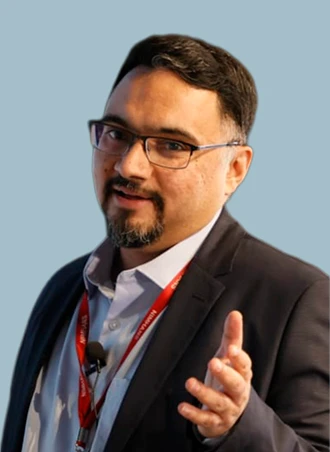
Dr. Suhas Satish
National Institute of Mental Health and Neurosciences, Bengaluru, India
Dr. Suhas Satish is an Assistant Professor of Psychiatry at the National Institute of Mental Health and Neurosciences (NIMHANS), Bengaluru.
His work sits at the intersection of adult psychiatry disorders, clinical neuroscience and digital mental health, aiming to advance a future where care is predictive, personalized, and grounded in measurable biology.
Dr. Satish is a recipient of the World Psychiatric Association (WPA) Early Career Fellowship, the NIMHANS Silver Jubilee University Gold Medal, and the Frank Noronha Award from NIMHANS.
Beyond his research in precision psychiatry, Dr. Satish is deeply involved in the global ecosystem of medical publishing.
He was selected for and trained under the prestigious Lancet Psychiatry Editorial Board Development Program, providing him with unique, high-level insights into the editorial decision-making process and the standards of world-leading medical journals.
He mentors early-career researchers in leadership and academia
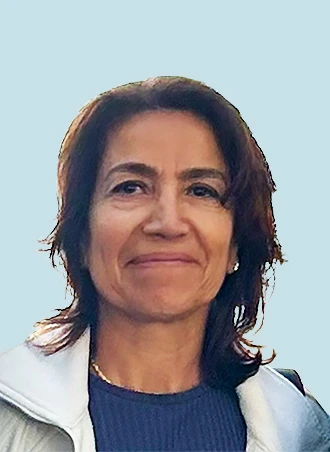
Dr. Anissa Abi-Dargham
Stony Brook University,
New York, USA
Anissa Abi-Dargham, MD, is Chair of Psychiatry and Behavioral Health, Lourie Endowed Chair in Psychiatry, SUNY Distinguished Professor, and Associate Dean for Clinical and Translational Science at Stony Brook University’s Renaissance School of Medicine.
Dr Abi-Dargham was born in Beirut, Lebanon, where she obtained her medical degree. She did a residency training in Psychiatry at the University of TN in Memphis followed by two research fellowships, at NIMH then Yale University.
Dr. Abi-Dargham is an expert in the areas of molecular imaging, pharmacology, schizophrenia and addiction. She is an internationally recognized leader in the use of molecular imaging of the human brain to study schizophrenia and its comorbidity with addiction.
Her research has resulted in seminal findings describing the complex alterations of dopamine transmission in schizophrenia and the relationship to clinical symptoms, cognition and response to treatment.
She has recently focused on modulators of dopamine such as the cholinergic system and the kappa opioid system, using PET to uncover specific relationships between targets and symptom domains.
In recognition for her work, she received the Leiber Prize for outstanding research in schizophrenia from the Brain and behavior Research Foundation, she was elected to the National Academy of Medicine in 2016 and served as President of the American College for Neuropsychopharmacology (ACNP) in 2017.
She is a Special Lecturer at Columbia University in New York, where she spent the last twenty-two years of her career prior to her move to Stony Brook University in 2016.
She directs the Multi Modal Translational Imaging Lab at Stony Brook and oversees a multidisciplinary team with expertise in multiple neuroimaging modalities used in tandem to address important questions about the brain mechanisms of schizophrenia.
She is also currently chairing the APA DSM subcommittee on candidate biomarkers and biological factors.